The two tests that matter
Under BS 5266 practice in the UK, emergency lighting is not a once-a-year job. You need a monthly function test (often called a flick test) and an annual full-duration test — typically three hours for commercial premises.
Every month
Function test
Brief flick test — confirm every fitting comes on. Keep it short so you do not drain the battery.
Every year
Duration test
Full rated run — usually three hours. Catches tired batteries the monthly test will miss.
Monthly function test
Prove every luminaire and illuminated exit sign comes on under battery. Keep it short so you do not drain the pack. Step-by-step: how to do a monthly emergency lighting test.
- Simulate mains failure with the test key, inhibit switch, or central test facility.
- Walk the route. Confirm each fitting lights and looks normal — not dim, flickering, or missing a head.
- Restore supply. Note any failures by location or fitting ID before you leave the floor.
- Record the date, who tested, and the outcome in the site logbook.
Trained building staff often do the monthly function test. You still need a clear register of fittings and a place to log defects — otherwise next month’s tester starts from scratch.
Annual duration test
Run the system on battery for its full rated duration. This is the test that catches tired batteries. Step-by-step: how to run an annual duration test.
- Plan for the full rated period — usually three hours — and for recharge time afterwards.
- Check fittings during the run, not only at the start. Failures at the two-hour mark are common.
- Note which fittings failed, when, and what remedial work is needed.
- Issue the visit paperwork and update the site certificate / logbook as the client expects.
See visit report vs certificate vs logbook if you are unsure which document to leave after the annual.
What to record
Inspectors care as much about the paper trail as the fittings. For each test, the logbook should show:
- Date and type of test (monthly function or annual duration)
- Who carried it out
- Result per fitting — or a clear pass with failures listed by ID / location
- Remedial action and when it was completed
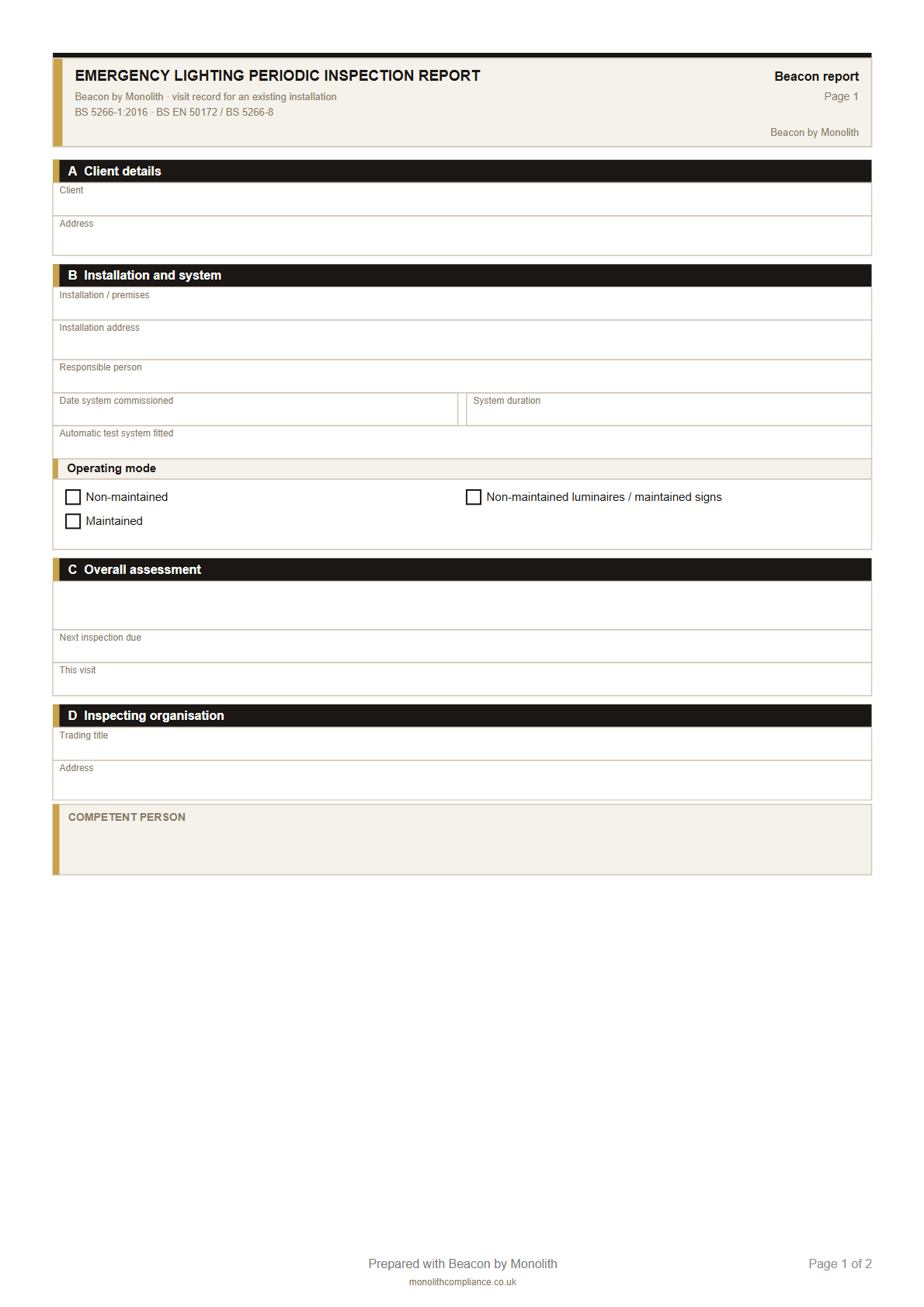
Free templates
Blank visit report & site certificate
Print, fill in, hand to the client — no signup.
What usually fails
- Dead or weak batteries — especially on older fittings that still pass a short flick test but die mid-duration.
- Missing fittings on the list — stores, plant rooms, and late additions never made it onto last year’s spreadsheet.
- Gaps in the monthly log — the annual looks fine; the months in between are blank. That is still a compliance gap.
- Rewriting the register every visit — if you start the fitting list from scratch, you will miss something. See keep a living site register (update the fitting list between visits instead of rewriting it).